vim-glsl
glsl.vim
Provides basic functionality such as syntax highlighting or code folding
for standard OpenGL ES 1.0 shaders, and for additional directives used in
three.js (for example, #include).
Supported file extensions: .glsl, .vs, .fs
Installation
- Using pathogen? Open your terminal and run:
cd ~/.vim/bundle && git clone git://github.com/petrbroz/vim-glsl.git- Using Vundle? Open your .vimrc and add:
Plugin 'petrbroz/vim-glsl'- Using NeoBundle? Open your .vimrc and add:
NeoBundle 'petrbroz/vim-glsl'Features
Syntax highlighting
Based on WebGL 1.0 specs.
Additionally, #include directives used in three.js
are also recognized.
Code folding
Simply based on cindent.
Reference documentation
The built-in variables, constants, and functions of OpenGL ES GLSL are documented
using vim's docs format, so you can look up the documentation using something like
:h texture2D(), or just hit K while the cursor is on the function.
If these don't work, you may need to update your help tags. See
:h helptagsfor more information.
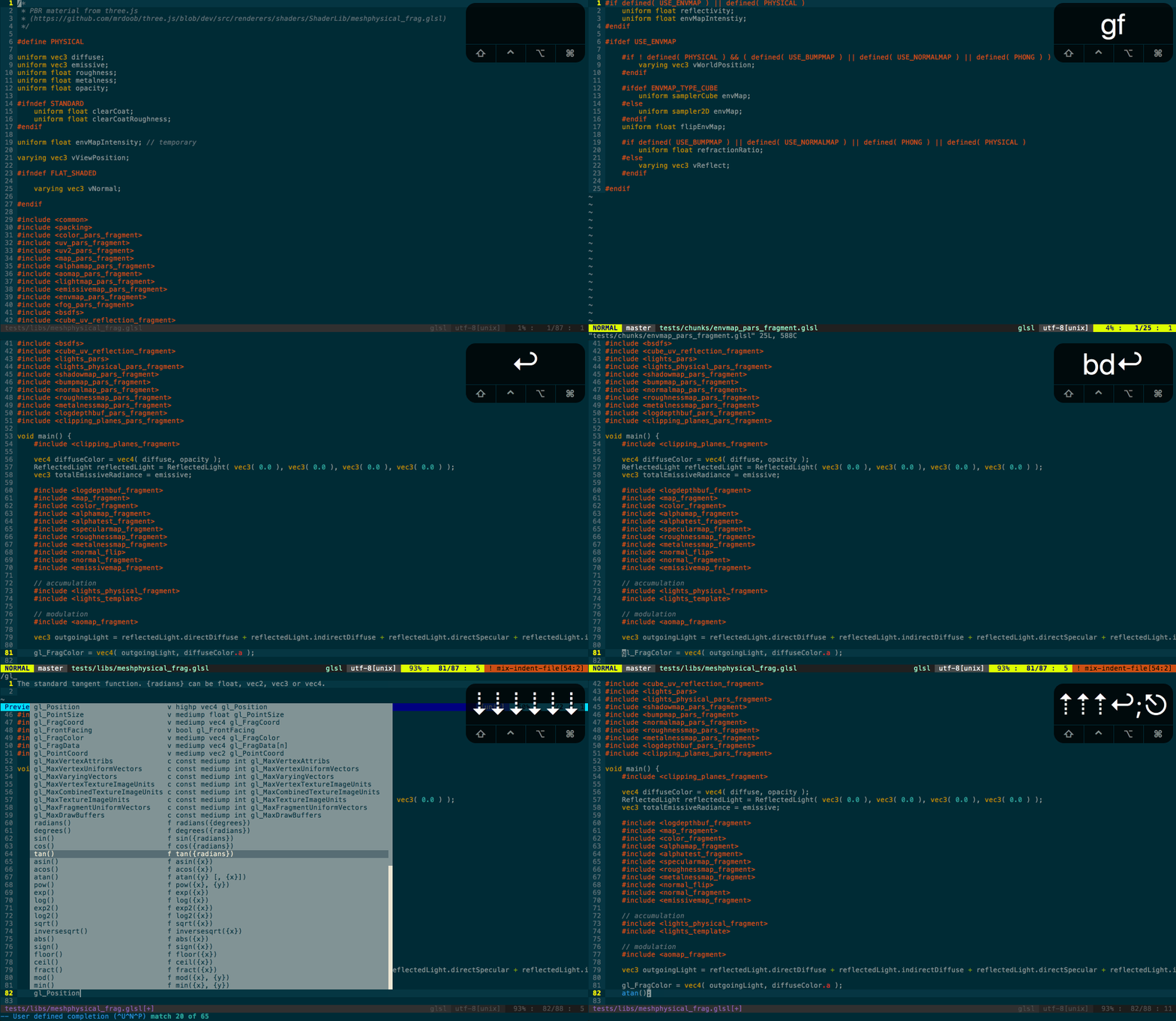
Autocomplete
The same reference documentation mentioned above is used to provide the user-defined
autocompletion. Hit ctrl-x ctrl-u while in insert mode to invoke it. If you want
to use omnicompletion instead (ctrl-x ctrl-o), add the following line to your
.vimrc file:
set omnifunc=glsl#CompleteFuncGo to shader chunk
With cursor inside the brackets of the #include<foo> directive, gf will try to find
foo.glsl, foo.vs, or foo.fs in the subtree of the current working directory.
License
Distributed under the same terms as Vim. See :help license.